
A fully booked diary is often an illusion of clinical productivity. When short-notice cancellations strike or complex treatments overrun, managing dental associate schedules quickly becomes a high-stress scramble that drains surgery revenue. You already know the friction this creates: front-desk teams feel trapped by rigid templates, whilst associates grow frustrated by fragmented afternoons, inaccurate procedural booking times, and lost earnings.
Predictable associate revenue relies on active capacity governance rather than passive appointment booking. In this guide, you will discover how to structure dental associate diaries to eliminate idle chair time, protect clinical output, and prevent schedule fragmentation. We break down practical diary protocols, procedural timing benchmarks, and automated capacity workflows you can deploy directly alongside your existing PMS to keep every surgery running efficiently.
Key Takeaways
- Accurately managing dental associate schedules requires synchronising individual clinical pacing with practice overheads, replacing rigid templates with verified procedural benchmarks.
- Strategic block scheduling protects daily production targets by grouping high-yield restorative treatments and preventing routine reviews from fragmenting surgery time.
- Basic automated text reminders fail to prevent costly clinical downtime; proactive no-show prediction and instant waitlist backfilling are vital to defend associate earnings.
- Specialist capacity intelligence software functions directly alongside your current PMS to maximise chair utilisation without requiring a disruptive system migration.
The Operational Impact of Ineffective Associate Scheduling
Effective associate diary management requires synchronising clinical pace, surgery overheads, and daily patient flow. It treats diary structure as a core operational driver rather than an administrative afterthought. In modern practices, managing dental associate schedules poorly transforms surgeries into cost centres. When diaries fragment, clinical capacity evaporates permanently.
The True Cost of Surgery Chair Downtime
Every unused surgery hour represents irreversible revenue loss. Clinical time cannot be inventoried or recovered tomorrow. While a surgery chair sits empty, fixed overheads, including dental nurse wages, utilities, compliance, and facility leases, accumulate continuously. Grounded in standard healthcare administration principles, operational efficiency dictates that resource allocation must align with provider capacity. When schedules collapse early, reception teams often overcompensate by overbooking later slots. This creates rushed appointments, compromises clinical communication, and accelerates clinician burnout.
Balancing Clinical Autonomy with Practice Capacity Targets
Friction inevitably builds when associate expectations clash with business targets. Self-employed associates demand clinical autonomy and realistic treatment timings. Conversely, practice leadership requires predictable hourly turnover to maintain operating margins. Resolving this tension requires concrete operational guardrails rather than arbitrary diary filling:
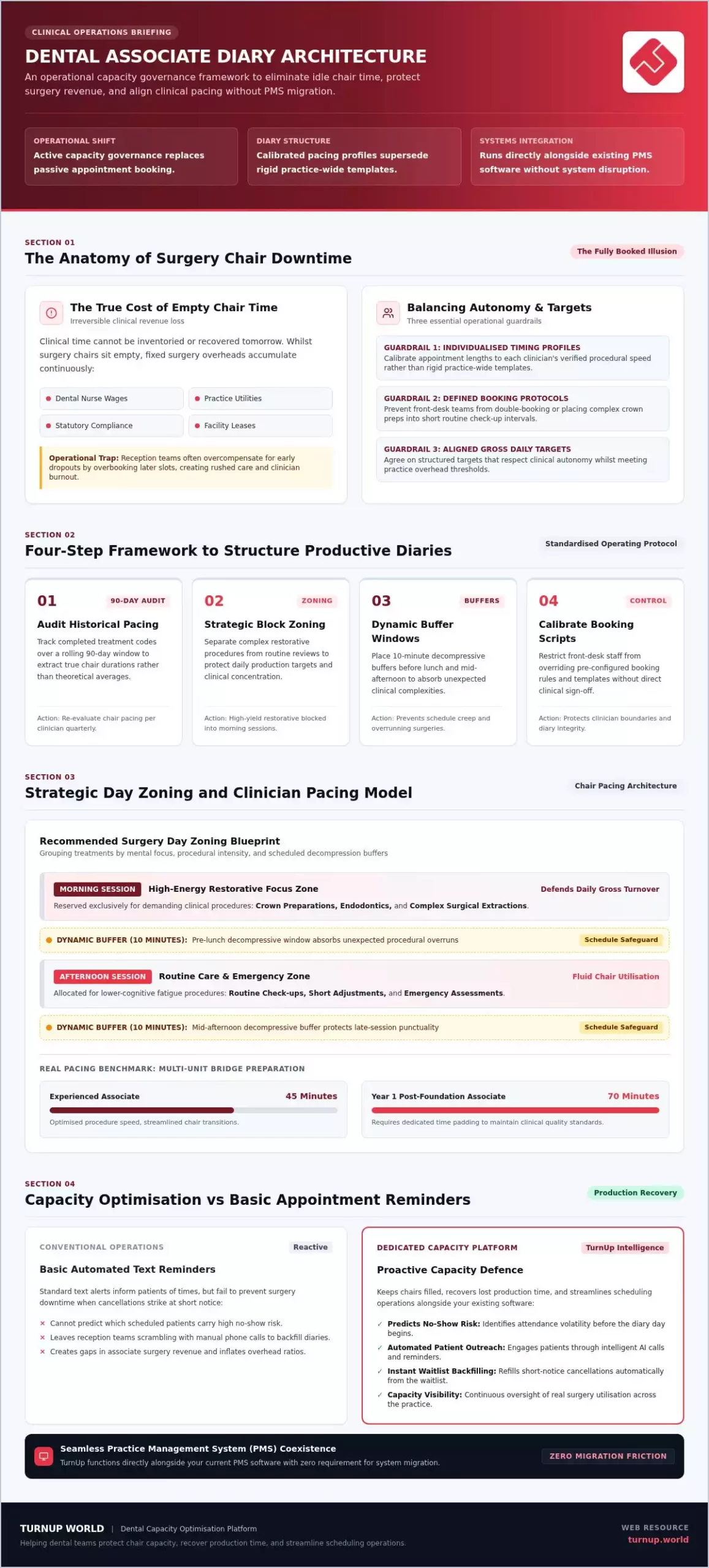
- Establish individualised timing profiles: Calibrate appointment durations to each associate’s clinical speed instead of enforcing rigid practice-wide templates.
- Define clear booking protocols: Prevent front-desk staff from haphazardly double-booking or slotting complex crown preparations into routine check-up intervals.
- Align gross targets: Agree on structured daily targets that respect clinical boundaries whilst meeting surgery overhead thresholds.
Mastering these operational boundaries is essential when managing dental associate schedules across single surgeries or multi-site groups. True chair utilisation balances practitioner pacing with reliable clinic productivity.
A Four-Step Framework to Structure Productive Associate Diaries
Rigid scheduling templates fail because they assume every dentist works at an identical speed. Successfully managing dental associate schedules requires an active operational framework that reconciles individual clinician pace with predictable surgery turnover. Follow this four-step method to engineer resilience directly into your appointment books:
- Audit historical pacing: Track completed treatment codes over a rolling ninety-day window to extract true chair durations rather than theoretical averages.
- Implement strategic block zoning: Separate complex restorative procedures from routine checks to protect clinical focus.
- Embed dynamic buffer windows: Place ten-minute decompressive buffers before lunch and mid-afternoon to absorb unexpected procedural complexities.
- Calibrate front-desk scripts: Restrict front-desk teams from overriding pre-configured booking rules without direct clinical sign-off.
Customising Procedure Time Blocks by Clinician
Universal duration defaults wreck diary flow. An experienced associate might prep a multi-unit bridge in forty-five minutes, whereas an associate within their first year post-foundation training could require seventy minutes. Leading clinical leaders consult ADA practice management resources to balance practitioner efficiency with clinical standards. Review chair times per clinician quarterly so your diaries flex as newer associates build speed.
Implementing Strategic Day Zoning
Mental fatigue degrades procedural efficiency. Reserve high-energy morning sessions exclusively for demanding crown preparations, endodontics, and complex surgical extractions. Move routine check-ups, short adjustments, and emergency assessments into late afternoons. Aligning these template allocations with our productive dental scheduling guide protects utilisation rates. Practices seeking to automate these diary flows can review their surgery metrics on turnup.world to eliminate diary bottlenecks without manual recalibration.
Mitigating Failed Attendances and Schedule Dropouts in Associate Surgeries
Failed attendances hit clinicians hardest. Under traditional contractor agreements, an empty chair directly slashes associate earnings whilst fixed surgery overheads continue to accumulate. Standard administrative methods treat no-shows as bad luck. Proactive practices treat them as predictable operational friction when managing dental associate schedules across busy NHS or private books.
Moving Beyond Basic Appointment Reminders
Generic SMS reminders confirm message delivery, but they don’t forecast attendance probability. A patient who booked four months ago carries a vastly higher dropout risk than one scheduled last Tuesday. By assessing booking lead times and historical attendance behaviour, reception teams can predict high-risk appointments days in advance. This foresight allows teams to deploy targeted, multi-channel verification to protect vulnerable clinical blocks before chair time is lost.
Rapid-Response Protocols for Short-Notice Cancellations
When short-notice cancellations strike, manual standby lists fail. Reception teams spend forty minutes playing telephone tag whilst the associate sits idle in an unproductive surgery. Fast-moving practices deploy automated outreach channels that match sudden diary voids with motivated, waitlisted patients in real time.
Explore our comprehensive guide to dental capacity management for enterprise-level workflows. To protect your clinicians from idle gaps and stabilise daily turnover, deploy TurnUp to automate cancellation recovery across your surgeries without replacing your existing software.
Optimising Scheduling Operations with Dedicated Capacity Intelligence
Traditional Practice Management Systems (PMS) are designed as static record ledgers rather than dynamic capacity optimisers. They store patient clinical histories, log invoices, and display colour-coded diary blocks. What they cannot do is actively balance daily surgery loads or prevent chair fragmentation. Managing dental associate schedules through manual oversight leaves operations teams constantly reacting to diary gaps instead of preventing them.
The Power of an Overlay Solution Without PMS Migration
Replacing a core PMS is notoriously disruptive. It risks data integrity, demands costly staff retraining, and forces surgery downtime that practices can ill afford. Modern dental organisations bypass this disruption entirely by adopting capacity intelligence software that operates directly alongside their current software. Front-desk teams maintain their familiar daily interfaces, whilst an intelligent automation layer works quietly in the background to analyse capacity trends, predict attendance dropouts, and trigger targeted backfills automatically.
Unlocking Sustainable Practice Growth
True operational clarity requires real-time chair utilisation reporting across every practitioner and site. Continuous oversight uncovers hidden capacity bottlenecks:
- Surfacing chair utilisation metrics: Live dashboards track surgery occupancy percentages rather than deceptive booking density numbers.
- Stabilising clinician earnings: Protecting diary occupancy prevents associate turnover by securing monthly remuneration targets.
- Multi-site group scalability: DSO operations directors gain centralised visibility to rebalance patient demand across multiple regional locations.
For practice leaders, managing dental associate schedules effectively transforms chair capacity from a daily administrative friction into a predictable engine of gross turnover. Review comprehensive operational frameworks in our detailed guide to maximising dental practice operational efficiency to implement these governance controls across your surgeries.
Take Control of Associate Diary Governance
Predictable surgery turnover doesn’t happen by chance. Successfully managing dental associate schedules demands moving away from passive diary booking towards proactive capacity governance. When you calibrate procedural durations to individual clinician pacing and zone complex restorative treatments into protected blocks, you eliminate front-desk friction whilst defending vital surgery profit margins.
Achieving this operational resilience doesn’t require an expensive or disruptive practice overhaul. Built specifically for multi-chair practices and multi-site dental groups, TurnUp integrates seamlessly alongside your existing PMS with zero system migration required. The platform automatically predicts attendance risks, recovers short-notice cancellations from your waitlist in minutes, and provides real-time chair utilisation reporting across every surgery. Take the friction out of daily clinic pacing and protect your clinicians’ earning potential. Optimise your associate schedules with TurnUp World to turn vacant chair time into reliable clinical productivity today.
Frequently Asked Questions
How do associate scheduling models differ between NHS and private dental clinics?
NHS scheduling centres on contract targets and Units of Dental Activity (UDAs), requiring high patient volume and strict allocation for mandatory urgent care courses of treatment. Private scheduling prioritises gross hourly turnover and treatment plan conversion. Managing dental associate schedules in mixed clinics requires distinct template zones to ensure high-value elective care and NHS contract obligations don’t compromise one another’s surgery timings.
What is the best way to handle an associate who regularly runs over allocated appointment times?
Audit thirty days of completed appointment data to identify the exact procedural codes causing clinical bottlenecks. Rather than forcing unrealistic speed, expand booking parameters for complex treatments and embed ten-minute buffer blocks before switchovers. This data-led adjustment eliminates daily friction, keeps reception operations running calmly, and prevents delayed appointments from cascading through the rest of the clinic’s afternoon schedule.
How far in advance should associate appointment books be opened for patient bookings?
Restrict open diary access to a rolling four-to-six-week horizon rather than opening full six-month books. Extended lead times sharply increase failed attendance rates and make template changes difficult to execute. Keeping booking horizons tight stabilises associate surgery capacity, preserves diary agility for comprehensive treatment plans, and prevents schedule fragmentation across both independent practices and expanding dental groups.
Can automated waitlists refill short-notice associate cancellations without front-desk manual calling?
Specialised capacity software automatically matches cancelled chair time against standby patient preferences using automated messaging and intelligent outreach. Motivated patients confirm and backfill the vacant surgery within minutes. This rapid response completely removes the manual burden of front-desk calling lists, keeping associate chairs populated and protecting daily clinical production without adding extra administrative pressure to reception teams.
How does capacity optimisation software integrate with our existing dental practice management system?
Dedicated capacity intelligence tools operate as an overlay directly alongside your existing PMS infrastructure without requiring system replacement or data migration. The platform reads your live diary data, predicts attendance risks, and coordinates cancellation recovery in real time. Front-desk staff retain their everyday workflow while practice leaders gain complete multi-site visibility into actual chair utilisation and lost production.