
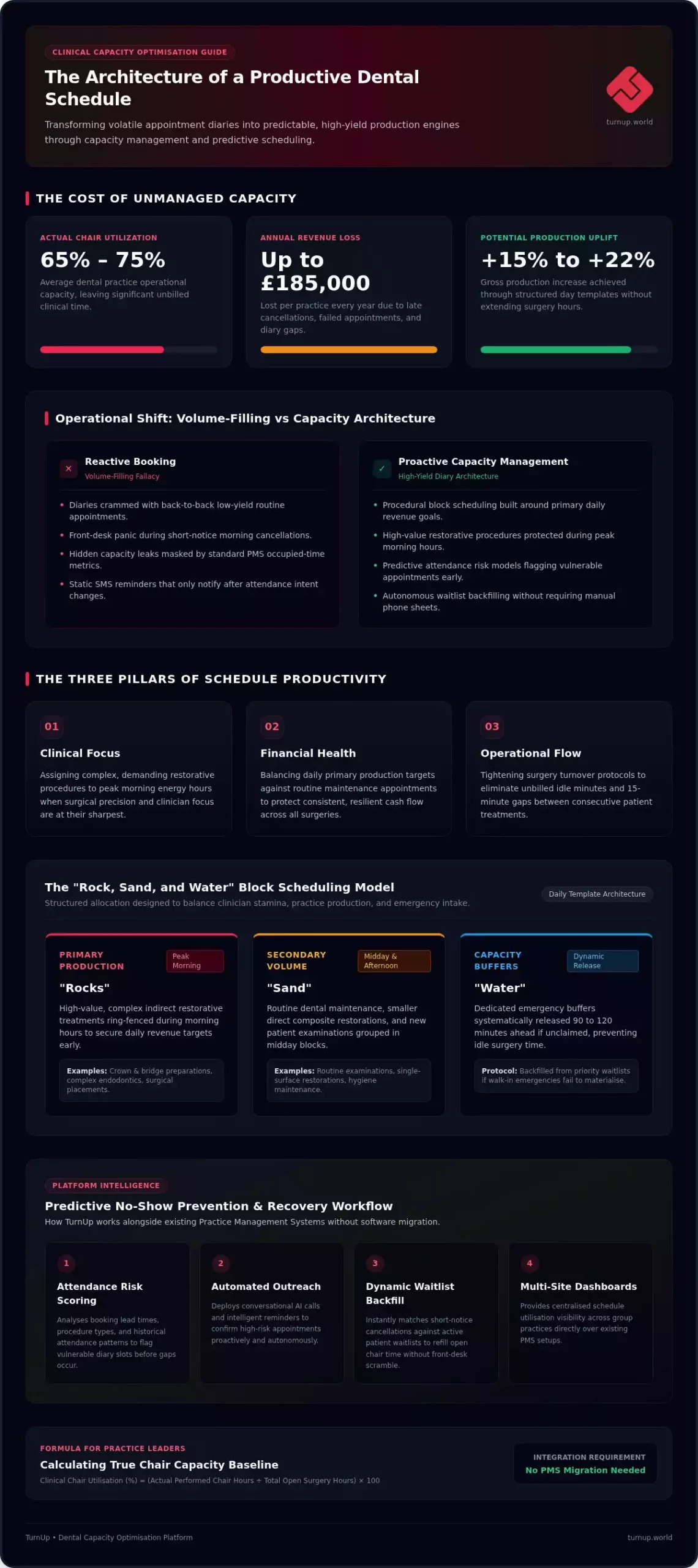
The average dental practice operates at just 65% to 75% of its true clinical capacity, losing up to £185,000 every year to late cancellations and failed appointments. Most practice leaders believe the solution is simply booking more patients, yet cramming the diary only fuels front-desk overwhelm and clinician burnout. Understanding how to create a productive dental schedule is not an administrative chore. It is a capacity optimisation strategy that demands predictive foresight rather than reactive firefighting.
You already know the frustration of watching a high-value morning unravel when a short-notice cancellation leaves a clinical chair empty. This guide breaks down the architectural principles and automated workflows required to transform a volatile appointment book into a predictable, high-yield production engine. We will examine procedural block scheduling templates, dynamic waitlist backfilling, and the capacity management workflows that protect your revenue without requiring a disruptive software migration.
Key Takeaways
- Discover how to create a productive dental schedule by shifting from reactive volume-filling to a capacity-led diary architecture designed around daily revenue goals.
- Implement the “Rock, Sand, and Water” block scheduling methodology to systematically protect high-yield restorative procedures whilst balancing surgery turnover.
- Move beyond static text reminders by leveraging predictive no-show models and automated waitlist outreach to backfill cancellations before chair time is lost.
- Standardise operational visibility across multi-site dental groups using centralised utilisation dashboards that layer directly over your existing PMS without requiring software migration.
The Architecture of a Productive Dental Schedule
A full appointment book is often an expensive illusion. Packing a diary with back-to-back routine appointments creates the appearance of a thriving surgery, yet it frequently masks lost production and bottlenecked treatment plans. Understanding how to create a productive dental schedule requires aligning clinical capacity directly with high-value treatment demand. While standard appointment scheduling software systems merely log timestamps, modern capacity management treats chair utilisation as the definitive operational metric. Reactive booking scrambles to plug gaps as they occur; proactive architecture designs the day for maximum yield.
The Three Pillars of Schedule Productivity
A resilient diary structure balances clinical performance with commercial targets across three distinct operational areas:
- Clinical focus: Assigning complex, demanding restorative procedures to peak morning energy hours when surgical precision is highest.
- Financial health: Balancing daily primary production targets against routine maintenance to protect stable cash flow.
- Operational flow: Tightening surgery turnover to eliminate unbilled idle minutes between consecutive patients.
Calculating Your Current Capacity Baseline
You cannot optimise what you don’t accurately measure. Calculate your practice baseline by dividing actual performed clinical chair hours by total open surgery hours across a typical month. Most practice management systems obscure true chair utilisation by logging late starts, early finishes, and unbilled 15-minute diary gaps as occupied time. Uncovering these hidden capacity leaks is the foundational step in learning how to create a productive dental schedule that consistently hits production targets without burning out your clinical team.
Mastering Block Scheduling and Procedure Mix
Procedural block scheduling establishes operational control over clinical chaos. Implementing diary templates around the “Rock, Sand, and Water” methodology ensures daily revenue goals are secured before opening the schedule to low-yield bookings. High-value restorative treatments (“rocks”) occupy peak morning hours when clinician focus is sharpest. Routine maintenance, small composite restorations, and examinations (“sand”) populate midday slots. Clear block architecture protects associate productivity targets and standardises day-to-day delivery, which is essential when managing dental associate schedules effectively across multi-chair environments.
Designing the Ideal Day Template
Benchmark ADA Health Policy Institute capacity data demonstrates that unmanaged appointment distributions trigger severe clinical bottlenecks. Allocating ring-fenced morning blocks for complex indirect restorations, whilst grouping new patient examinations in the early afternoon, drives a 15% to 22% gross production increase without extending operating hours. Dedicated emergency buffers (“water”) should be systematically released 90 to 120 minutes ahead if unclaimed, preventing idle chair hours if walk-ins fail to materialise.
Balancing Hygiene and Recall Lists
A thriving hygiene department directly fuels the doctor’s restorative pipeline, yet recall columns suffer the highest attendance volatility. Understanding how to create a productive dental schedule requires a systematic approach to manage a recall list for hygiene appointments. Deploying TurnUp as your capacity optimisation platform allows teams to backfill sudden gaps autonomously from an active waitlist, eliminating front-desk panic and protecting daily surgery utilisation.
Protecting the Book: Predictive No-Show Prevention
Manual call sheets and paper waitlists cannot protect modern dental margins. Static text reminders only inform you when a patient intends to cancel; they do nothing to forecast or prevent the disruption. True schedule resilience requires deploying predictive modeling for dental appointment no-shows to evaluate attendance risk before diary gaps emerge. Systems analyse booking lead times, treatment types, and historical attendance patterns to flag vulnerable slots. TurnUp integrates alongside your existing PMS without migration, deploying conversational AI calls and automated outreach to confirm high-risk bookings autonomously.
The Short-Notice Cancellation Recovery Workflow
When short-notice cancellations strike, receptionists rarely have time to phone down a manual waiting list. An automated capacity engine resolves this by instantly querying your PMS waitlist the moment an opening appears. It dispatches targeted, fast-fill notifications to patients seeking earlier appointments, refilling hygiene and restorative gaps within minutes without pulling reception teams away from in-clinic patient care.
Handling Consistently Late or Non-Compliant Patients
Mastering how to create a productive dental schedule requires operational policies informed by patient behavioural trends. Chronic failed-to-attend (FTA) behaviour drains surgical margins and distorts clinic utilisation reporting. Instead of reacting after the chair sits empty, practices can use predictive risk scoring to enforce shorter booking horizons or require deposits for repeat offenders. To eliminate empty surgery hours across your practice or DSO, optimise your clinical chair capacity with TurnUp today.
Scaling Productivity Across Multi-Site Dental Groups
Standardising scheduling protocols across multi-clinic organisations presents complex operational hurdles. Centralised teams must coordinate diverse clinician styles across fragmented software environments. TurnUp operates as a capacity optimisation platform directly over your existing PMS setups, avoiding costly and disruptive database migrations. Group executives gain standardised portfolio visibility, unlocking vital gains in dental practice operational efficiency by eliminating blind spots across estate-wide surgery utilisation.
Centralising the Front Desk Copilot
Regional call hubs often struggle with lag between appointment desks and surgeries. TurnUp functions as an intelligent copilot for centralised booking hubs, tracking real-time surgery capacity across every practice location. The platform surfaces high-risk FTA slots and automates patient outreach across clinics simultaneously. Centralised teams can manage exceptions rather than making repetitive outbound calls, shielding local practice receptionists from administrative fatigue.
The Path to Capacity Maturity
Achieving network-wide production predictability demands shifting from static diaries to automated workflows. Learning how to create a productive dental schedule across a dental group requires consistent operational execution. Use this implementation checklist to audit clinical capacity:
- Audit baseline chair utilisation: Benchmark billable treatment time against open surgery hours for each practice site.
- Implement procedural templates: Standardise morning restorative blocks and afternoon hygiene recall distribution across all clinician diaries.
- Deploy predictive risk screening: Identify volatile bookings before appointments occur, targeting attendance confirmations intelligently.
- Automate waitlist backfilling: Replace manual phone calls with instant patient outreach to refill short-notice gaps autonomously.
- Monitor group KPIs centrally: Track recovered clinical hours, surgery utilisation, and FTA trends from a single multi-site dashboard.
Transform Your Dental Capacity Engine
Achieving predictable clinical revenue requires moving past static diaries and reactive measures. Knowing how to create a productive dental schedule is about mastering procedural block architecture, protecting surgical margins with predictive attendance intelligence, and automating short-notice cancellation recovery. When you align chair availability directly with high-value treatment demand, front-desk friction disappears and daily gross production rises sustainably.
You don’t need a complex system overhaul to fix empty chair hours. TurnUp functions as an intelligent capacity optimisation platform that integrates alongside your existing PMS without database migration. With predictive AI no-show prevention, autonomous waitlist outreach, and DSO-scale utilisation reporting, clinical teams maintain full diaries with complete operational clarity. Ready to protect your chair time and unlock hidden surgical capacity? Discover how TurnUp optimises your dental capacity and build a resilient, high-yield appointment book today.
Frequently Asked Questions
What is the most effective way to prevent dental no-shows?
The most effective method is shifting from static reminder messages to predictive attendance scoring. Rather than relying on generic SMS texts that merely register late cancellations, predictive capacity engines evaluate booking lead times, attendance history, and procedure types. This allows practices to deploy automated conversational outreach specifically to high-risk appointments, resolving attendance friction proactively before valuable surgery time is lost.
How does block scheduling improve dental practice production?
Block scheduling structures clinical diaries around clear financial targets rather than random booking requests. Ring-fencing peak morning sessions exclusively for high-value restorative treatments ensures complex cases are prioritised when clinician focus is sharpest. Routine maintenance is scheduled into midday zones. This disciplined approach demonstrates how to create a productive dental schedule that lifts daily gross production by 15% to 22% without lengthening clinical shifts.
Can I improve my dental schedule without changing my Practice Management System?
Yes, you don’t need an expensive database migration to modernise your scheduling workflow. TurnUp operates as an intelligent capacity layer that integrates directly over your existing PMS software. The platform synchronises with your established diaries to predict no-show risks, automate waitlist refills, and provide estate-wide chair utilisation reporting. Practices gain modern capacity optimisation immediately without the disruption or training burden of switching core practice management software.
How do I fill short-notice gaps in my hygiene schedule?
Automated waitlist backfilling is the fastest way to rescue hygiene chair time. Hygiene recall lists suffer frequent volatility due to multi-month booking horizons. The moment a cancellation occurs, an automated capacity system scans your PMS records and dispatches fast-fill offers to suitable patients waiting for earlier appointments. The chair refills within minutes, maintaining consistent clinical throughput without placing manual phone burdens on your reception team.
What KPIs should I track to measure dental scheduling productivity?
Practices should prioritise chair utilisation rate, unbilled idle surgery time, and production per clinical hour over raw appointment volume. Tracking Failed to Attend (FTA) percentages and cancellation backfill speed reveals true operational efficiency. When evaluating how to create a productive dental schedule, monitoring these capacity metrics across providers and sites highlights hidden diary friction, ensuring your clinical team reliably hits daily production targets.