
In 2023, 50% of UK adults visited an NHS dentist. Forecasting dental patient demand means looking beyond booked appointments to anticipate when patients are likely to seek care, and whether the practice has capacity to meet that need. Appointment patterns can reveal a shift before it appears in the diary.
Bookings alone don’t show the full picture. Enquiries, cancellations, rebookings and attendance patterns can reveal whether demand is rising, changing or shifting between appointment types. Compare these signals with chair availability to make better-informed capacity plans.
This article explains what patient demand means in dentistry, how appointment data can signal emerging changes, and which factors may influence demand for dental services in the UK. It also sets out a practical way to review your data and turn patterns into capacity decisions, from rota planning to keeping chairs available for appointments.
Key Takeaways
- Separate patient demand from booked appointments by considering enquiries, cancellations and attendance alongside chair capacity.
- Use enquiry and appointment patterns to spot potential changes early and support more informed capacity planning.
- Compare seasonal patterns with local economic and demographic shifts to understand what may be driving demand.
- Build a useful forecast from consistently tracked data, including appointment type, booking activity, cancellations and attendance.
What Does Patient Demand in Dentistry Mean?
Forecasting dental patient demand means estimating likely appointment volumes, treatment mix and timing. It distinguishes potential need from the appointments a practice can deliver. For UK practice leaders, that distinction matters: a full diary can still conceal unmet demand or capacity gaps.
Demand reflects clinical need, affordability and access, not just diary occupancy. In 2023, 50% of UK adults visited an NHS dentist. That figure describes attendance, not all unmet need or future bookings. Economic shifts can affect whether patients accept proposed treatments, defer them or seek private care.
The UK dental market includes practices with different service mixes: 15% operate entirely privately, 15% solely under the NHS, and 70% offer both. These models shape the capacity available to meet demand. A practice offering both needs to distinguish NHS activity from private appointments when interpreting changes.
To compare forecast demand with NHS dental contract targets and private practice capacity, assess projected NHS activity against the practice’s target. Then compare private demand with available clinician hours, chairs and treatment mix. Keep the two views separate before identifying shared constraints, such as clinician time.
Estimate demand by treatment type and patient demographics. Group appointment history by procedure, age band, new or returning status, and booking outcome, then compare equivalent periods. For example, a rise in restorative appointments among older patients may require different capacity from an increase in adult cosmetic consultations.
Demographics can change both the timing and type of demand. An ageing population may shift the mix of restorative and maintenance appointments, while school schedules can affect suitable appointment times for families. Track these patterns alongside economic changes, including shifts in accepted treatments and rebookings.
Common forecasting errors include treating attendance as total need, combining NHS and private activity, and projecting unusual periods forward without adjustment. These mistakes can hide changes in demand and lead to capacity plans based on misleading averages.
Use a practical review: segment appointments by funding model, treatment type and patient group; compare like-for-like periods; then check whether clinician and chair capacity can meet the forecast. Revisit your assumptions when local access, affordability or patient mix changes.
Dental appointment data as a leading indicator of demand
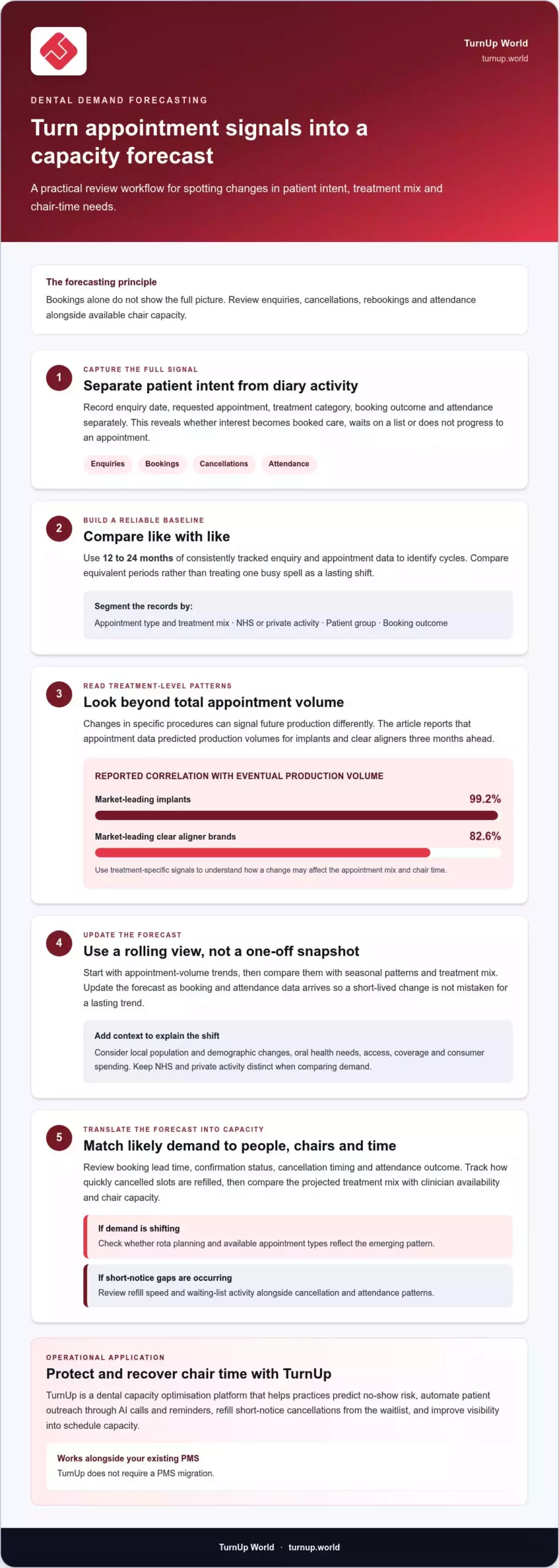
Appointment records can signal demand before treatment production changes because enquiries and bookings capture patient intent. Track enquiry date, requested appointment, treatment category, booking outcome and attendance separately. This shows whether increased interest becomes booked care, waits on a list or disappears. Use 12 to 24 months of consistently tracked enquiry and appointment data to identify cycles. Compare equivalent periods, rather than treating one busy spell as a permanent shift.
Treatment-level patterns can offer an earlier signal than total bookings. Dental appointment data has predicted production volumes for implants and clear aligners three months ahead. It correlated with 99.2% of eventual production volumes for market-leading implants, and 82.6% for market-leading clear aligner brands. These figures illustrate why teams should separate procedures: a rise in implant enquiries may have a different effect on chair time from increased demand for preventive appointments.
For forecasting methods, begin with a simple analysis of appointment-volume trends, then compare those trends with seasonal patterns and treatment mix. Use a rolling forecast and update it as booking and attendance data arrives. This makes changes visible without treating one unusual week as a lasting trend.
To forecast cancellations, no-shows and waiting-list activity, review each appointment’s booking lead time, confirmation status, cancellation timing and attendance outcome. Track how quickly cancelled slots are refilled, then compare patterns by appointment type and patient group. For UK local demand, combine practice management system records with local population and demographic data, keeping NHS and private activity separate.
Make the analysis operational by reviewing enquiries, bookings, attendance, cancellations and waiting-list activity together. Compare the projected treatment mix with clinician availability and chair capacity. Add local changes in demographics, oral health needs, coverage and consumer spending to explain potential shifts in demand. Record the reason for each forecast adjustment so the next review can distinguish a genuine pattern from a short-lived change.
Factors affecting demand for dental services
Demand shifts with household finances, patient routines and local population needs. In 2026, the UK dental market is described as having recovering household finances alongside persistent cost-of-living awareness. For a dental practice, this can influence whether patients proceed with planned treatments, defer them or enquire about alternatives. Track changes in booking and acceptance patterns alongside available capacity.
Seasonality can affect appointment timing. January and February are high-demand months for many UK practices, linked to new-year health intentions. March through May is steady to high, with pre-summer cosmetic demand contributing. June and July are typically moderate-demand months, making retention and recall useful planning priorities. August is typically quieter, partly because of school holidays and family schedules; September and October often see demand rise as routines resume. December is typically low to moderate, as pre-holiday schedules disrupt visits.
Seasonality and local factors can affect NHS and private dental care differently because appointment mix, access and patient choices vary between practices. Compare NHS and private bookings separately over the same seasonal periods, then review local enquiry, cancellation and attendance patterns before adjusting capacity.
Local population changes can alter treatment mix, not just appointment volume. A practice serving more families may face different timing needs from one with a larger older population. Review local age profiles alongside demand for preventive care, restorative treatments and orthodontic appointments. Treat these as planning signals, not assumptions about individual patients.
Other shifts matter. The COVID-19 pandemic reduced demand for dental services in the UK, showing how external disruption can change booking patterns. Insurance arrangements, household budgets and concerns about treatment can also influence whether patients book or proceed. Record these factors as context when interpreting practice management data, rather than treating every fall as a lasting trend.
Use a repeatable review before changing rotas: compare NHS and private activity; check treatment categories and patient demographics; mark seasonal periods; then identify local events or population changes that could explain shifts. This helps teams plan capacity without mistaking a short-term dip for a sustained change in demand.
What data is needed to forecast dental patient demand accurately
Build the forecast from records that connect patient interest to usable chair time. A diary total alone can conceal whether demand is for NHS or private appointments, which procedures patients request, and how often bookings change. Start with 12 to 24 months of consistently tracked enquiry and appointment data. Keep categories consistent across the period, so apparent growth reflects patient behaviour rather than altered coding.
- Enquiries: Record when patients contact the practice, their requested appointment type and whether they book. For example, rising implant enquiries without corresponding bookings may signal a conversion or availability issue.
- Appointment outcomes: Mark attended, cancelled, rescheduled and unattended appointments separately. Include cancellation timing and whether the slot was refilled, so the forecast reflects usable capacity.
- Treatment and funding mix: Distinguish procedure categories and NHS or private appointments. A rise in one category can require different clinician skills and chair time from another.
- Patient group: Use consistent, relevant demographic categories, such as age band and new or returning status. Compare groups to reveal different booking patterns without assuming every patient behaves alike.
- Capacity: Capture clinician availability, chair availability and appointment duration. A forecast of demand is only operationally useful when compared with the time the practice can actually provide.
Then add context. Note seasonal periods, local population changes and any service or booking-process changes that affect comparisons. If appointment coding changes midway through the period, flag the date and avoid treating the categories as directly comparable.
Review the dataset regularly. Compare forecast and actual results by appointment type, funding model and outcome, then record where they diverge. If enquiries rise but completed bookings do not, investigate access or booking conversion before adding capacity. If cancellations increase, review refill activity and attendance patterns. This turns practice management records into a repeatable planning process, linking demand signals to clinician time, chair availability and scheduling decisions.
TurnUp World: Dental capacity optimisation platform for dental practices and multi-site DSOs
TurnUp World helps dental teams protect chair time and improve visibility into schedule capacity. The platform predicts no-show risk and automates patient outreach through AI calls and reminders, helping teams manage appointments before gaps disrupt the diary.
When an appointment is cancelled, TurnUp World can support rebooking and fill the slot through automated wait-list management. TurnUp World works alongside your existing practice management system, with no PMS migration required. The focus is on keeping chairs filled and improving scheduling operations.
To discuss your practice’s capacity needs, visit turnup.world.
Turn forecasts into capacity decisions
A forecast is valuable when it informs a decision. Choose a planning question for your next review: which sessions need more capacity, where should appointment availability shift, or how can your team reduce unused chair time? A focused question turns analysis into action instead of another report that goes unread.
Make forecasting dental patient demand a repeatable management process. Set a regular review point, compare the forecast with what happened, and record why the two differed. Then revise the assumptions and decide what the team will change next. This creates a practical feedback loop for practice managers and central scheduling teams, helping each review inform the next capacity decision.
If you’re ready to connect demand planning with day-to-day scheduling operations, contact TurnUp World about your capacity priorities. A focused conversation can help you identify where to start and move towards a more deliberate approach to chair capacity.
Frequently Asked Questions
How to forecast patient demand for a dental practice?
Forecasting dental patient demand starts with reviewing appointment and attendance patterns alongside the future diary. Group appointments by type, clinician and time of day, then compare booked demand with available chair time. For example, if hygiene appointments regularly cluster on particular days, plan suitable chair availability and staff cover around that pattern. Update the forecast as bookings, cancellations and rebookings change, rather than relying on a fixed diary snapshot.
How can dental practices forecast staffing and surgery capacity from patient demand?
Match expected appointments to the time, skills and surgery capacity each appointment type requires. Build a view of booked demand by clinician, appointment type and session, then compare it with staff availability, suitable rooms and planned breaks. A full diary can still conceal a capacity gap if the required surgery setup is unavailable. Review that gap before changing rotas or opening additional sessions.
What software and costs are involved in dental practice demand forecasting?
Practices can start with practice management system reports and a spreadsheet, or use a dental capacity platform to improve visibility of scheduling capacity. Compare software features and terms against your requirements rather than assuming a standard fee. TurnUp works alongside an existing PMS, with no migration required. Its Free trial and Free account let dental teams assess the platform.