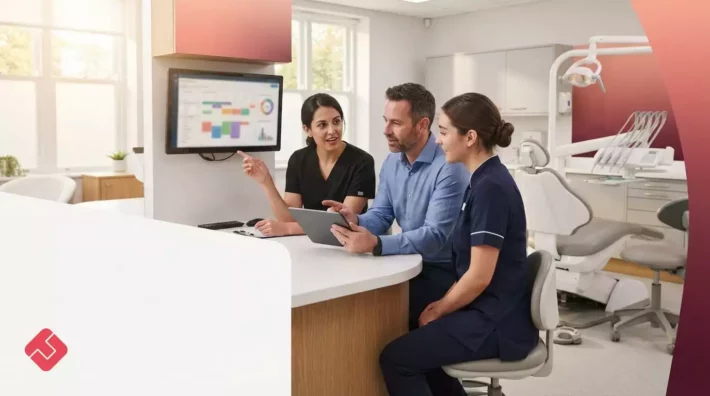
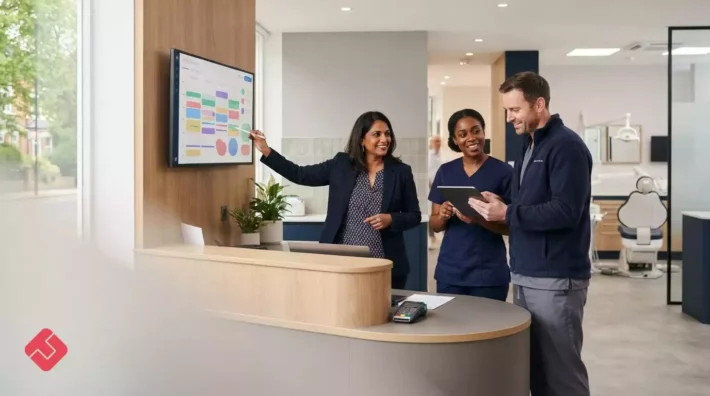
What if your front desk wasn’t an administrative bottleneck, but your practice’s most efficient revenue engine? You’ve likely seen the toll that repetitive admin and constant diary gaps take on your team. High staff turnover and receptionist burnout are no longer just HR issues. They’re operational risks that drain your profitability. Empowering dental receptionists with technology is the strategic shift required to stop these leaks and reclaim control over your clinic’s capacity.
We understand that the manual grind of chasing cancellations feels like a losing battle. This 2026 training guide provides the blueprint to transform your front office from a cost centre into a high-efficiency growth hub. You’ll learn how to leverage capacity optimization tools to fill short-notice gaps automatically and reduce the burden on your staff. We’ll examine how the TurnUp World Front Desk Copilot acts as a silent partner. It streamlines workflows and ensures your chairs stay full while your team stays focused on elite patient coordination.
Key Takeaways
- Transition from reactive gatekeeping to proactive capacity management by positioning technology as a “Copilot” for your front office team.
- Audit the patient journey to identify schedule “dead zones” and eliminate the manual bottlenecks that lead to persistent diary gaps.
- Deploy automated solutions like the TurnUp Front Desk Copilot to solve no-shows and last-minute cancellations without increasing staff workload.
- Master the art of empowering dental receptionists with technology by developing SOPs that balance technical proficiency with elite patient communication.
- Standardise front desk operations across multiple clinics to turn capacity optimization into a scalable, data-driven growth engine for your DSO.
From Gatekeepers to Growth Drivers: The New Role of the Dental Front Desk
The traditional dental front desk is obsolete. For decades, the role was defined by reactive gatekeeping. Receptionists answered phones, booked appointments, and filed paperwork. In 2026, this “answering machine” model is a liability. High staff turnover and persistent diary gaps are the direct results of an outdated, manual system. Empowering dental receptionists with technology is no longer a luxury; it’s a strategic requirement for any DSO aiming to scale in a competitive UK market.
The shift is fundamental. We are moving from manual data entry to strategic patient journey coordination. This transformation relies on the “Front Desk Copilot” concept. This isn’t about replacing your team with software. It’s about augmenting human capability. Technology acts as a silent, reliable engine that eliminates operational uncertainty. It allows your staff to transition from being overwhelmed administrators to becoming high-efficiency growth drivers who actively manage practice capacity.
The Evolution of Dental Administration
Why Empowerment Beats Replacement
Efficiency doesn’t mean removing the human touch. Dentistry remains a high-trust industry. Patients require empathy and human judgment during clinical triage and treatment planning. Technology provides the data; the receptionist provides the connection. When your team has real-time insights into capacity and patient history, they make faster, more accurate decisions. Empowering dental receptionists with technology gives them the tools to solve problems before they impact the bottom line. This balance between technical proficiency and soft skills is critical. You can explore the broader implications of this balance in our guide on Clinical Efficiency vs Operational Efficiency in Dentistry. By positioning technology as a Copilot, you ensure your practice remains both high-tech and high-touch.
Step 1: Mapping the Patient Journey for Capacity Optimization
You can’t optimize what you don’t measure. Before deploying any new platform, you must audit your current front office workflows to identify exactly where your team feels “stuck”. For most UK practices, the bottleneck isn’t a lack of patients. It’s the administrative friction of managing them. Empowering dental receptionists with technology begins with a clear-eyed look at how much time is lost to manual data entry and repetitive phone calls.
Identifying the “dead zones” in your schedule is the next priority. These are the gaps created by no-shows and late cancellations that go unfilled. In a high-volume DSO, even a small percentage of idle chair time results in thousands of pounds in lost revenue every month. Capacity optimization is the bridge between clinical availability and patient demand. By establishing a baseline for these losses now, you can accurately measure the ROI of your future tech stack. Establishing these benchmarks allows you to see exactly where a capacity optimization platform can deliver the most immediate impact.
Identifying Scheduling Bottlenecks
The cost of manual administration is often hidden. When a receptionist spends three hours a day manually calling patients to confirm appointments, they aren’t just doing admin; they’re creating a bottleneck. This manual approach to short-notice gap filling is reactive and inefficient. It relies on luck and timing rather than data. Empowering dental receptionists with technology means removing these low-value tasks. It allows your team to shift their focus from “chasing the diary” to high-level patient coordination that actually improves the bottom line.
Setting Operational KPIs for 2026
Success in a modern practice isn’t measured by call volume. It’s measured by chair utilisation. You need to set specific benchmarks for front desk response times and no-show rates. A data-driven culture requires your team to understand these metrics. When you measure the effectiveness of no-show prevention tools, you’re looking for a reduction in idle time, not just a busier front desk. Preparing your team for this shift ensures they see technology as a tool for success rather than a source of surveillance. This clarity builds a proactive environment where every team member is aligned with the practice’s growth goals.
Step 2: Deploying the Front Desk Copilot to Eliminate Empty Chairs
Manual scheduling is a game of chance. Even the most diligent receptionist cannot monitor the diary every second while managing a busy waiting room. This is where the TurnUp Front Desk Copilot changes the operational dynamic. It acts as a silent, high-speed engine integrated directly with your Practice Management System (PMS). By empowering dental receptionists with technology, you remove the burden of constant diary surveillance. The Copilot identifies gaps and acts on them before they become revenue losses.
Integration is seamless. There is no need to overhaul your existing software or retrain your team on a complex new interface. The Copilot sits alongside your current tools, providing the foresight needed to maintain maximum chair utilisation. It handles the repetitive outreach while your team focuses on the patients standing right in front of them. This proactive energy ensures that your front desk is always one step ahead of the daily schedule.
Automating the Last-Minute Gap
Late cancellations usually result in idle chair time because the manual process of filling them is too slow. Predictive AI solves this by identifying patients whose booking history suggests they can attend at short notice. We follow the 2-minute rule. The goal is to fill a gap within 120 seconds of it appearing; often, this happens before the receptionist has even finished the cancellation call. This level of responsiveness is only possible through Last-Minute Dental Appointment Filling: Automated Strategies for DSOs. It turns a potential financial leak into a seamless, automated booking.
Proactive No-Show Prevention
Standard SMS reminders are no longer enough for a modern practice. Effective capacity management requires intelligent engagement. The Front Desk Copilot moves beyond generic alerts to predictive communication. Some industry professionals report that moving to an automated, intelligent follow-up system can reduce no-show rates by 3-5%. The system doesn’t just remind; it triages. It identifies high-risk appointments, such as those with a history of late arrivals or unconfirmed status, and alerts your team immediately. This foresight allows empowering dental receptionists with technology to reach its full potential. Your staff can intervene with a human touch where it is most needed, ensuring your clinic operates at peak capacity without the stress of constant manual chasing.

Step 3: Training Your Team for High-Tech, High-Touch Patient Care
Efficiency without empathy is a clinical failure. In 2026, the elite dental receptionist possesses a hybrid skillset: high-level tech proficiency combined with emotional intelligence. Empowering dental receptionists with technology isn’t just about software installation; it’s about cultural integration. You must develop a Standard Operating Procedure (SOP) that defines exactly where the Copilot’s automation ends and human intervention begins. This clarity prevents overlap and ensures your team feels supported rather than monitored.
Overcoming tech resistance requires demonstrating immediate “quality of life” wins. When staff realise they no longer have to spend Monday mornings manually calling 50 patients to fill a single gap, their buy-in is immediate. Technology eliminates the “phone tag” nightmare. By removing the repetitive grind, you allow your team to focus on the high-impact patient interactions that drive case acceptance. The system identifies the gap. The receptionist manages the relationship. To see how this works in practice, you can book a demo of the TurnUp Front Desk Copilot today.
Mastering the Copilot Interface
Onboarding should focus on the capacity optimization dashboard. Your team needs to interpret demand signals rather than just booking appointments. Training must cover how the Copilot identifies patient patterns and why certain alerts take priority. When a receptionist understands the data behind an automated suggestion, they can act with more confidence. For a deeper dive into these technical workflows, refer to the TurnUp Front Desk Copilot: The Definitive Guide. Mastering the interface is the first step toward true operational foresight.
Elevating the Patient Experience
Scaling Success: How TurnUp Transforms DSO Front Office Performance
Scaling a DSO requires more than just acquiring new sites. It requires a repeatable, high-efficiency operational blueprint. Without standardisation, growth leads to fragmented processes and inconsistent revenue. Empowering dental receptionists with technology across your entire group ensures that every clinic operates with the same surgical precision. You move away from reactive, site-specific habits toward a unified capacity management strategy that scales effortlessly.
This approach significantly reduces the need for expensive central call centres. When on-site teams are hyper-efficient, they can manage higher patient volumes without increasing headcount. Technology acts as the silent engine that handles the mundane, leaving your staff to focus on elite patient care. This shift not only improves the bottom line but also positions your practice as a modern innovator. In a competitive market, providing your team with cutting-edge tools is the best way to attract and retain top-tier administrative talent.
Multi-Site Capacity Management
DSO directors need granular oversight to make informed decisions. Aggregated data allows you to benchmark performance across different locations in real-time. You can identify which clinics are maintaining peak chair utilisation and which require intervention. This data-driven foresight allows you to forecast patient demand and allocate resources with total confidence. Consistent growth is only possible when you have a clear view of your group’s total capacity. You can explore this further in our framework for Standardising Procedures Across Dental Clinics.
The Long-Term ROI of Staff Empowerment
Staff turnover is a silent killer of practice valuation. The cost of recruiting and training new receptionists far outweighs the investment in better tools. By empowering dental receptionists with technology, you eliminate the burnout associated with manual admin and constant diary gaps. A stable, tech-proficient team is a high-value asset that directly improves your practice’s EBITDA. Efficiency isn’t just about speed; it’s about creating a sustainable, profitable environment where your team can thrive. Empower your team, fill your chairs, and turn your front office into a permanent revenue engine.
Drive the Future of Dental Capacity Management
The transition from a manual front desk to a high-efficiency revenue engine is no longer a choice for growing DSOs. It’s a necessity. By auditing your patient journey and deploying automated gap-filling tools, you eliminate the operational uncertainty that drains practice profitability. Empowering dental receptionists with technology allows your team to focus on elite patient coordination while the software handles the repetitive grind of no-show prevention.
TurnUp provides specialised healthcare capacity optimization designed specifically for dentistry groups. Our platform acts as a silent, reliable engine that fills last-minute gaps automatically, backed by UK-based support and implementation. You don’t have to choose between clinical excellence and operational efficiency; you can achieve both with the right tools in place. This shift ensures your practice remains resilient in a competitive market while reducing staff burnout.
Ready to reclaim your idle chair time and support your team? Optimise your chair capacity with the TurnUp Front Desk Copilot and transform your practice into a proactive growth hub. Take control of your diary today.
Frequently Asked Questions
How does technology help reduce dental receptionist burnout?
Technology removes the manual “chasing” aspect of the role. By automating reminder cycles and gap-filling outreach, you eliminate the high-stress administrative friction that leads to fatigue. Empowering dental receptionists with technology shifts their focus from repetitive data entry to high-value patient care. This change in workflow reduces the cognitive load on your team, creating a more sustainable and productive front office environment.
Will a Front Desk Copilot replace my existing dental software?
No, the TurnUp Front Desk Copilot is designed to integrate seamlessly with your existing Practice Management System (PMS). It acts as an intelligent layer that enhances your current tools rather than replacing them. The platform pulls real-time data from your diary to identify capacity risks and opportunities. This ensures your team can keep using familiar software while benefiting from advanced automation and predictive foresight.
How long does it take to train front office staff on TurnUp?
Most teams become proficient with the TurnUp interface within a few hours of initial onboarding. The platform is built for high-speed use, focusing on intuitive dashboards rather than complex configurations. Because it automates the most time-consuming tasks, the learning curve is offset by immediate time savings. Training focuses on interpreting capacity signals and managing the “high-touch” patient interactions that the technology facilitates.
Can technology really fill last-minute dental cancellations automatically?
Yes, predictive AI fills short-notice gaps by identifying patients most likely to attend at a moment’s notice. The system bypasses the traditional “phone tag” process by sending targeted, relevant offers to the right patients instantly. We aim for a two-minute window to fill a gap once it appears. This level of responsiveness is impossible with manual calling, ensuring your chairs remain productive even after a late cancellation.
What is the difference between an AI receptionist and a Front Desk Copilot?
An AI receptionist often attempts to replace human interaction entirely, which can feel clinical. A Front Desk Copilot is an augmentation tool that empowers your staff to make better decisions. It handles the data-heavy tasks of capacity optimization, but leaves the final clinical triage and patient relationship management to your team. This “soft skills + tech proficiency” model is the most effective way of empowering dental receptionists with technology.
How do patients react to automated dental appointment filling?
Patients generally appreciate the speed and convenience of automated scheduling. Modern patients expect a seamless digital experience, and receiving a relevant, short-notice appointment offer feels like a premium service rather than an intrusion. By using predictive data, you ensure that your outreach is always timely and helpful. This increases patient satisfaction while simultaneously protecting your practice’s revenue from the impact of no-shows.
Is healthcare capacity optimization suitable for smaller dental practices?
Capacity optimization is vital regardless of practice size. While DSOs benefit from multi-site standardisation, a single-chair practice still loses significant revenue from even one unfilled gap. Efficiency is a universal requirement for profitability. TurnUp provides the same high-level foresight and automation to smaller clinics, allowing them to operate with the same surgical precision as much larger dental groups.
What are the key metrics for measuring front desk efficiency in a DSO?
The primary metric for DSO efficiency is chair utilisation rate. You should also track the “time-to-fill” for cancellations and the overall no-show percentage across all sites. Measuring front desk response times for automated alerts provides insight into how well your team is interacting with the Copilot. These data points allow directors to benchmark performance and identify which locations require additional support to reach peak capacity.