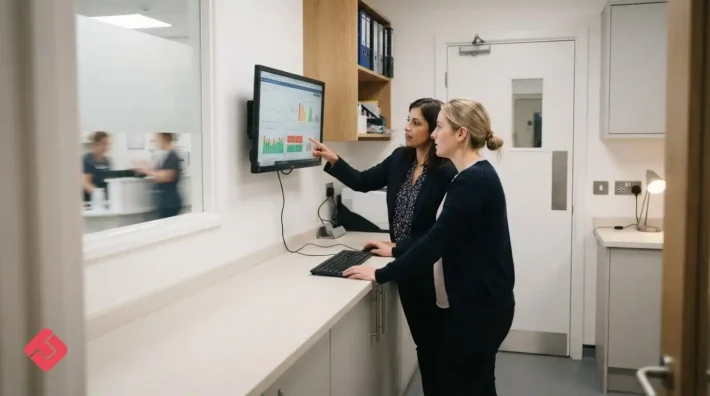
A fuller diary does not always mean a smoother dental day. Lean management principles for dental practices focus on making work more reliable: standardise repeatable tasks, reduce avoidable waiting and movement, and involve the team in improving workflows. The aim is not to rush appointments, but to protect clinical time and reduce friction across the practice.
Small disruptions can add up. Staff may search for supplies, handovers may vary, or a cancellation may leave chair time unused. These are workflow problems, not signs that people simply need to work harder. Consistent processes help teams spot and address issues, while clarifying daily responsibilities.
This article explains how lean thinking applies to everyday dental operations, from identifying waste and streamlining room preparation to building staff ownership of improvements. You’ll learn how to focus on recurring tasks, find downtime and unnecessary movement, and connect reliable processes with capacity visibility. The aim is a practical framework for improving flow while keeping patient care and the people delivering it at the centre.
Key Takeaways
- Review recurring workflows with the people who use them to uncover avoidable waiting, motion and rework.
- Standardise common tasks and room preparation so teams spend less time searching for supplies or correcting inconsistent processes.
- Give staff a voice in proposed changes and use trials to build practical ownership across the practice.
- Track how cancellations and no-shows affect chair capacity, then use timely outreach and waitlist recovery to protect appointment time.
Continuous improvement in dental practice workflows
Continuous improvement turns recurring workflow problems into opportunities to refine how a practice operates. In dentistry, the most useful changes address a specific process while protecting clinical decisions and patient care.
Kaizen and ongoing improvement
Kaizen is an approach to continuous improvement that makes small, ongoing changes with input from the people doing the work. A dental team might review room preparation, handovers or instrument reprocessing, then test a clearer method. Staff involvement matters because the people performing a task can spot friction managers may miss. Team problem-solving can also help reduce errors and support patient care and safety.
Practical steps for implementation
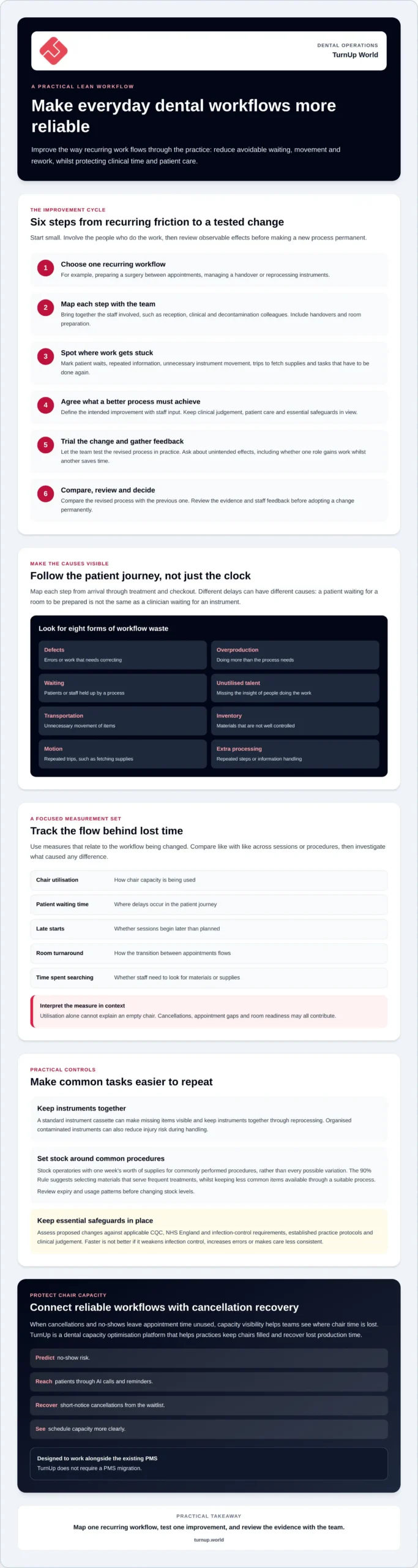
Start with one recurring workflow, such as preparing a surgery between appointments. Map each step with the staff involved, note where people search for items or repeat tasks, and agree what the improved process should achieve. Trial a change, gather feedback and compare the revised process with the previous one. Track relevant measures such as waiting, rework, missing supplies or handover delays to see whether the change helps.
Lean improvements must preserve the practice’s applicable CQC, NHS England and infection-control requirements. Keep existing clinical safeguards in place and assess proposed workflow changes against established practice protocols before adopting them.
Risks and limitations of lean methods
Lean methods can cause problems if speed becomes the main goal or changes are imposed without clinical input. A faster process is not an improvement if it weakens infection control, increases errors or makes patient care less consistent. Standardisation must also leave room for clinical judgement: a routine approach may not suit every patient or procedure. Use staff feedback and review each trial before making a change permanent. This keeps improvement focused on removing friction, not cutting essential steps.
Reducing downtime and unnecessary motion
Lean thinking makes waste visible across clinical and administrative work. The aim is to remove avoidable delays and movement without cutting essential care steps.
Mapping patient journeys
A patient journey map records each step from arrival through treatment and checkout. In a UK practice, map the process with reception, clinical and decontamination staff, including handovers and room preparation. Mark where patients wait, staff repeat information, instruments are moved or supplies are fetched. A patient waiting while a room is prepared points to a different cause than a clinician waiting for an instrument. This view helps teams target the source of delay.
Tracking lean metrics
Lean metrics show where time and capacity are lost and whether a change improves flow. Track chair utilisation alongside patient waiting time, late starts, room turnaround and time spent searching for materials. Compare like with like across sessions or procedures, then investigate the workflow behind any change. Utilisation alone cannot explain an empty chair: cancellations, appointment gaps and room readiness may all contribute.
Lean management groups waste into defects, overproduction, waiting, unutilised talent, transportation, inventory, motion and extra processing. In a dental practice, unnecessary movement could mean repeated trips between a surgery and a supply area. A standard instrument cassette can make missing items visible and keep instruments together through reprocessing. Organised contaminated instruments can also reduce injury risk during handling.
Material control matters too. Stock operatories with one week’s worth of supplies for commonly performed procedures, rather than every possible variation. The 90% Rule suggests selecting materials that serve frequent treatments, while keeping less common items available through a suitable process. Review expiry and usage patterns before changing stock levels. For scheduling teams, chair utilisation and cancellation recovery also help show where appointment capacity goes unused.
Building staff engagement and ownership
Lean changes work best when the people performing a task help shape it. A dentist, dental nurse, receptionist and decontamination colleague may each see a different part of the same patient journey. Bring those perspectives together before changing a handover or room-preparation process. Someone outside the department may spot a repeated step that has become routine for the team doing it every day.
Give staff a clear voice in shaping a proposed change. If appointment handovers leave reception unsure whether a room is ready, for example, ask clinical and front-desk colleagues to map how information currently flows. Invite them to suggest a simpler handover, identify potential problems and agree how to test it. A trial lets the team assess the change in practice before deciding whether to adopt it.
Keep the review focused on observable effects. Does the new handover reduce repeated questions, missed information or delays between appointments? Staff can flag unintended consequences, such as one role taking on extra work while another saves time. This keeps the discussion focused on the whole workflow, not just one task. Involving dental teams in problem-solving can help reduce errors and support patient care and safety.
Ownership also depends on clear decision boundaries. Define which routine operational choices staff can make independently and which need a practice leader’s input. For instance, the team can agree who handles a room-readiness issue or alerts colleagues to a schedule disruption. Clear responsibilities help work continue when the leader is away, while preserving appropriate escalation for clinical decisions.
Close each improvement cycle by sharing what changed and what the team learned. If a trial creates extra work or misses its aim, revise the process with the people using it. This feedback loop makes improvement part of daily operations, rather than a one-off instruction from above.
Dental practice workflow
A reliable workflow makes routine tasks clear, from patient arrival to room reset. Standard procedures and visible cues help teams coordinate handovers without relying on memory alone.
Standard operating procedures
A standard operating procedure sets out the agreed steps for a repeatable task, such as preparing a surgery or reprocessing instruments. It gives colleagues a consistent reference, reducing variation between shifts and clarifying responsibilities. In a dental practice, configure sterilisation cassettes for specific procedures and keep instruments secure throughout reprocessing. This supports a consistent process and makes essential handling steps visible.
Apply the 90% Rule by identifying procedures the practice performs 90% of the time, then standardise supplies around those needs. A practice needn’t stock every operatory with sixteen shades of composite material if a smaller working selection supports frequent procedures. In specialised settings focused on functional dentistry and cosmetic treatments, such as beyonddentistrynyc.com, dedicated procedure kits help keep materials accessible without overloading routine stock. Keep exceptions clear, so less common treatment needs don’t disrupt the routine setup. Review the procedure mix with clinical staff before changing the standard.
Visual management tools
Visual management uses clear labels, layouts or status indicators to show what a team needs to know at a glance. Labelled storage locations show where instruments belong, while a marked cassette makes a missing item easy to spot. In a surgery, a consistent layout helps staff find commonly used materials without repeated searching. Visual cues should support established procedures, not replace clinical judgement or infection-control protocols.
Make the visual system specific to the task. A room-reset checklist can show which steps remain before the next patient, while a simple status marker distinguishes a room that is ready from one awaiting preparation. Keep labels readable and locations consistent across relevant rooms. If a supply moves, update its label and tell the team; otherwise, the visual cue becomes another source of delay.
The practical takeaway is to standardise frequent tasks first, then make the agreed process easy to see. For example, align a procedure-specific cassette, storage labels and room-reset cues around the same workflow. Review them with the staff who use them and adjust when a recurring mismatch appears.
TurnUp World: Dental capacity optimisation platform for dental practices and multi-site DSOs
TurnUp World helps dental practices and multi-site DSOs protect chair time when no-shows and short-notice cancellations disrupt the diary. Its dental capacity platform predicts no-show risk and automates prevention, patient outreach and waitlist management to help recover appointments and improve visibility into scheduling capacity.
When a patient cancels at short notice, TurnUp automatically offers the freed slot to matching patients on a waitlist. Its AI call centre handles appointment confirmation, cancellation and rebooking workflows. TurnUp sits on top of the practice’s existing PMS, with no migration and no second diary.
Lean methods improve processes; capacity optimisation helps teams respond to schedule disruption. Contact TurnUp World to discuss protecting chair time and recovering appointments.
Make workflow improvement part of the operating rhythm
Lean management principles for dental practices create the most value when teams treat improvement as ongoing operational work, not a one-off project. Choose a workflow to refine, agree how to recognise progress, and keep reviewing whether the change supports staff and patient care. Over time, this discipline helps leaders connect daily decisions with the practice’s wider capacity.
TurnUp World supports dental teams working to protect chair time and improve scheduling operations. Identify where schedule disruption creates the greatest operational strain, then consider how better visibility and automated follow-through could help address it.
Contact TurnUp World to discuss your practice. A focused operational improvement can give your team a clearer starting point for building more consistent workflows.
Frequently Asked Questions
What are the core lean management principles for dental practices?
The core principles are to define value for patients, understand how work flows, remove avoidable waste and keep improving with staff input. A practice leader might examine how a patient moves from booking to follow-up, then identify where information or decisions stall. The aim is a dependable process that supports appropriate care, not simply faster tasks.
How can lean methods reduce waiting times and appointment delays in dental practices?
Lean methods reduce delays by identifying where appointments lose time and addressing the cause. If a clinician regularly starts late after a complex appointment, for example, review the handover and room-readiness process rather than shortening care. Clear appointment information, timely updates between reception and clinical staff, and a consistent response to schedule changes can help prevent one delay from disrupting later appointments.
How can lean management reduce dental practice costs without compromising patient care?
Lean management can reduce avoidable spending by targeting rework, expired stock and unnecessary processing, while protecting clinically necessary materials and steps. Review purchasing against actual use, then investigate items that repeatedly expire or remain unused. Separate operational waste from clinical requirements: a lower stock level is not a saving if it causes treatment delays or compromises the team’s ability to provide appropriate care.
How can dental teams involve staff in continuous improvement and daily problem-solving?
Give staff a simple way to raise an issue, describe its effect and suggest a small test. A team member might record that an unclear diary note led to repeated calls, then propose a consistent note format. Assign someone to review the suggestion and report back at a team discussion. Closing the loop shows whether the change helped and encourages colleagues to keep contributing.