
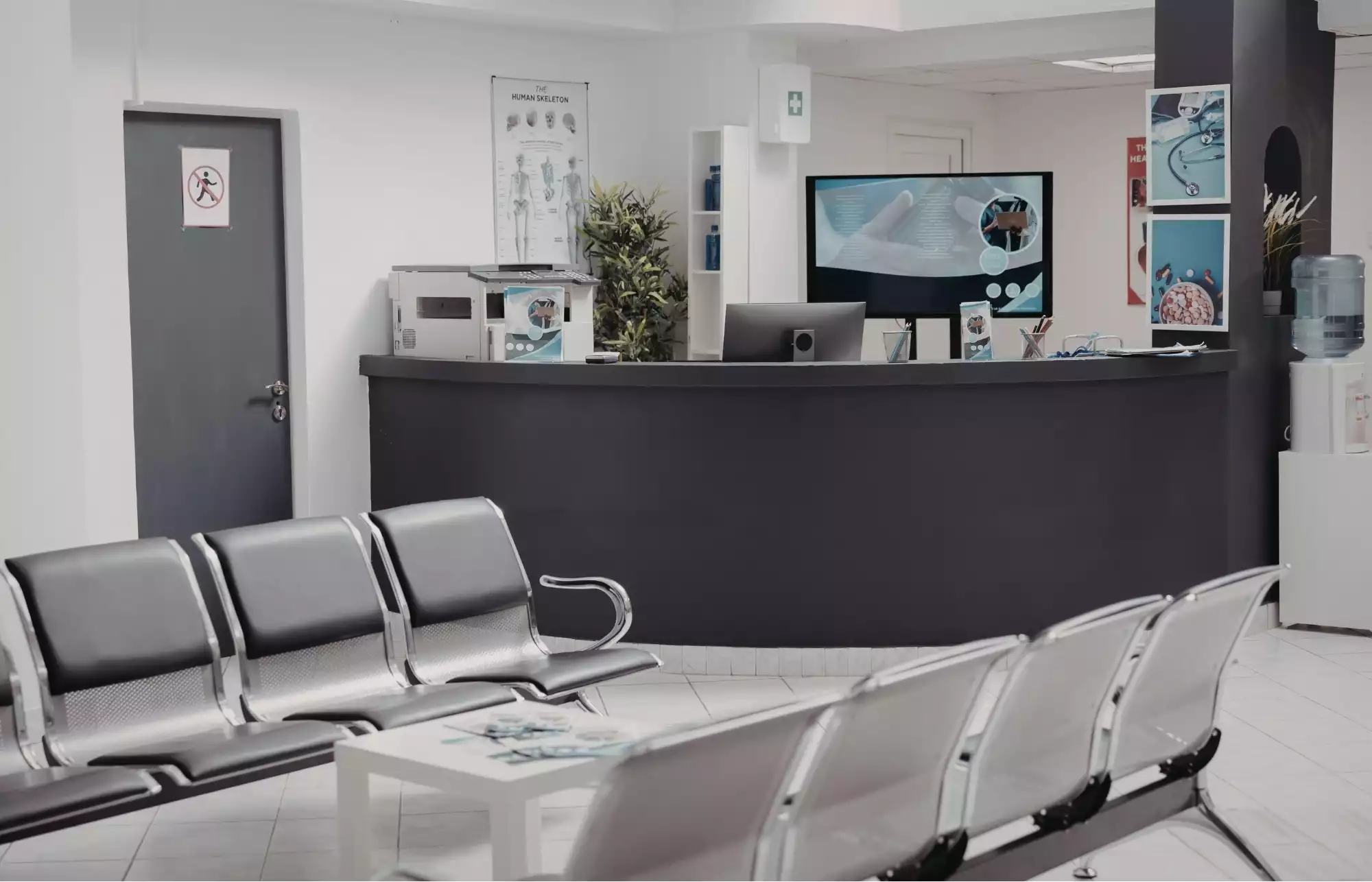
At the beginning of 2024, a surprising figure hit the headlines in the Netherlands: in just one year, over 800,000 patients failed to show up for their scheduled hospital appointments. No notice. No cancellation. Only an empty seat, an empty waiting room, and an awaiting healthcare professional.
These figures are the result of research by the Dutch news platform EenVandaag, which examined data from over thirty hospitals. Even this staggering figure is likely too low, as hospitals do not record no-show data in a uniform manner, and some institutions were unable to provide complete datasets. What might be dismissed as a simple “forgotten appointment” is actually a systemic crisis affecting everything from major hospitals to dental offices and primary care settings.
The Silent Cost of an Empty Chair
A no-show does not cause a loud failure or a visible crash; it is a silent inefficiency that leaves deep scars. By the time a patient fails to appear, the work has already been done: the specialist has reviewed the file, the treatment room has been booked, personnel have been assigned, and equipment has been prepared. In most cases, this lost time cannot be retrieved.
Financially, the costs add up with devastating speed. It is estimated that a single missed hospital appointment costs between €50 and €150, depending on the specialty. Large institutions incur massive losses; for example, the University Medical Center Groningen (UMCG) estimates a loss of €3.5 to €5 million every year solely due to missed appointments.
In a healthcare system already strained by staffing shortages and heavy workloads, every open slot is a wasted resource. Another patient could have been treated, and another waiting list could have been advanced. Instead, healthcare professionals are left with patchwork schedules and mounting frustration.
Why Patients Don’t Show Up: A Complex Human Issue
Rarely is a no-show the result of indifference. More often, the underlying motivations are complex and deeply human. Appointments are usually made months in advance, and a lot happens in the intervening time. Messages are missed, reminders are sent at the wrong time, or patients struggle with digital tools and language barriers.
A critical but often overlooked factor is anxiety. Fear is a major barrier, particularly in fields like dentistry, dermatology, or invasive diagnostics. A standard, automated reminder message does little to ease this fear; in some cases, it actually increases the patient’s stress, encouraging them to avoid the confrontation entirely by staying home. Understanding these behavioral patterns is vital; otherwise, effective solutions remain out of reach.
Why Fines Will Not Solve the Problem
In response to increasing no-shows, some institutions have implemented “no-show fees.” While the principle may seem sound, the outcome is often disillusioning. Fines are reactive—they record the failure after the damage is done rather than preventing it. Furthermore, they often penalize the most vulnerable populations and create an administrative burden where the cost of collection exceeds the revenue generated. The primary issue is not how to punish no-shows, but how to prevent them entirely.
From Reactive Events to Predictive Healthcare
Traditionally, healthcare planning has been reactive: documenting missed appointments, producing reports, and perhaps imposing penalties. This approach is no longer effective. The modern era requires predictive healthcare systems.
This implies smarter communication—not necessarily more messages, but the right message at the right time. It requires the recognition of patterns: which individuals are likely to miss appointments, when do they miss them, and under what conditions? While other sectors have used dynamic planning for years, the medical field is only now beginning to follow suit.
The Parallel with Dental Practices
The investigation by EenVandaag, though focused on hospitals, is equally applicable to dental practices. In dental offices, no-shows and last-minute cancellations result in direct, irrecoverable losses of “chair time.” Because dental offices often operate on tighter schedules and with less flexibility than large hospitals, the impact of a single no-show is multiplied.
Furthermore, the “fear factor” is most prominent in dentistry. Patients often view these appointments as “postponable,” leading them to reschedule repeatedly until the appointment is missed entirely. This makes conventional, static reminder systems wholly inadequate.
Technology: An Enabler, Not a Controller
At TurnUp, we witness this reality daily. We firmly believe that the way forward lies in intelligent support rather than manual effort or strict regulations. Technology should never seek to “control” patients; instead, it should aid them.
By utilizing intelligent systems that detect behavioral patterns, communication becomes more relevant and humane. Patients are reminded through the appropriate channel, with a tone tailored to their specific situation. This makes it frictionless to confirm, reschedule, or cancel an appointment.
“When a cancellation happens, the system should automatically find another patient waiting for an earlier slot. Rather than an empty seat, care is provided.”
This is precisely what our Front Desk Copilot is built to do. It blends scheduling, communication, and availability, allowing practices to maintain both efficiency and compassion.
From Empty Slots to 94% Utilization
The impact of this approach is transformative. Practices that evolve beyond static reminders to intelligent scheduling experience an immense growth in agenda usage. We have seen practices reach 94% capacity utilization. This means fewer empty seats, shorter waiting times, and significantly less pressure on the staff.
Wasted time is converted back into precious care, and healthcare teams regain control over their day. The uncertainty of the daily schedule is replaced by a reliable, automated flow that reduces stress for both providers and patients.
Why Standalone SMS Reminders Are Outdated
By 2026, sending a simple SMS reminder is no longer innovative—it is the bare minimum. The true difference lies in understanding the context. A forgetful patient requires a different response than a nervous one. A last-minute cancellation requires immediate implementation of a backup plan, not a manual phone call at the end of the day. Smart systems learn dynamically and do not treat every patient with a “one-size-fits-all” routine.
A Symptom of a Global Challenge
No-shows are a symptom of wider issues in healthcare: increasing costs, rising demands, and severe talent shortages. Every missed appointment is one too many—not because patients are unreliable, but because the system can and must function better. This is not just a Dutch problem; it is a crisis felt across the UK, Australia, and throughout Europe.
What Healthcare Organizations Can Do Today:
- Track your measurements: Without deep analysis, progress is impossible.
- Identify trends: Look for behavioral patterns rather than viewing no-shows as discrete, random occurrences.
- Invest in intelligent follow-through: Focus on the quality and timing of communication, not just the volume.
- Reduce friction: Make it as easy as possible for a patient to reschedule or cancel.
- Ensure immediate reuse: Use technology to ensure that waiting lists and last-minute availability confirm one another automatically.
Conclusion: Working Smarter, Not Harder
The fact that there are over 800,000 no-shows in a single year is a manifestation of how healthcare is currently delivered. Reducing these numbers is less a matter of tightening policies and more a challenge of being smarter and more people-focused.
At TurnUp, we believe the future of healthcare planning is about using technology that is capable of intuiting human behavior and reacting instantaneously. When schedules are flexible and communication is smart, empty chairs become a distant memory.
Ready to stop wasting time on empty chairs? TurnUp’s Front Desk Copilot helps you reach 94% occupancy while automating your scheduling process. See the technology in action and reclaim your day.


